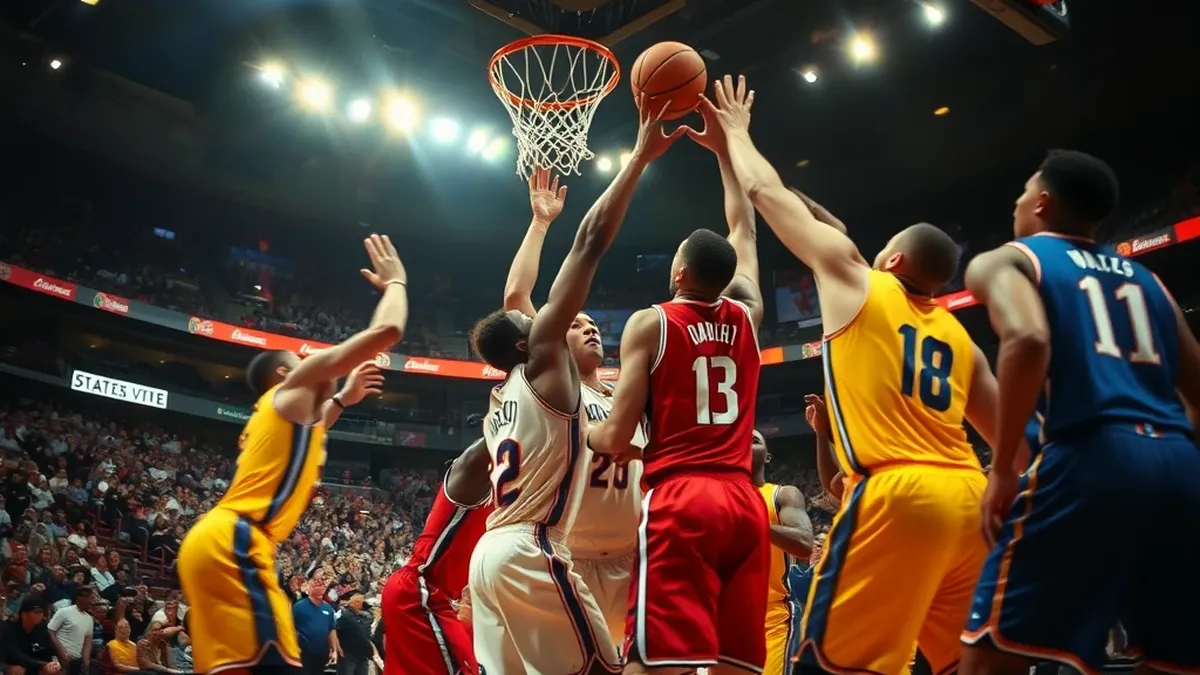
The Atlanta Hawks are in a precarious situation after suffering a staggering 51-point loss at home, a defeat that has left fans and analysts alike questioning the team's direction. With the playoffs seeming like a distant memory, the spotlight has turned to head coach Quin Snyder and whether his job is at risk. This performance has raised critical concerns about strategy, adjustments, and overall team cohesion.
Tactical Breakdown
In this recent game, the Hawks fell to their opponents in a way that highlighted significant tactical deficiencies. The team was outscored in every quarter, culminating in a dismal 132-81 defeat. The lack of defensive intensity was glaring; the Hawks allowed their opponents to shoot over 50% from the field and a staggering 45% from beyond the arc.
Quin Snyder's offensive schemes, which once showcased the talents of players like Trae Young and De'Andre Hunter, have not translated well into consistent production. The Hawks struggled with ball movement, registering only 15 assists throughout the game, a stark contrast to their opponents' 30. This lack of sharing the ball resulted in isolation plays that became predictable and easy to defend against.
- Defensive lapses allowed for easy buckets in transition. - The pick-and-roll execution was subpar, failing to exploit mismatches. - Bench scoring was virtually nonexistent, with only 24 points from reserves.
With defensive assignments being missed and offensive sets lacking creativity, Snyder's game plan did little to inspire confidence or momentum.
What It Means for Atlanta Hawks
This crushing defeat raises crucial questions about the future of the Hawks and the effectiveness of Snyder's leadership. For fans, the performance signifies more than just a bad game; it represents a concerning trend. After making the playoffs last season, the expectation was that the team would build on that success. Instead, they seem to be regressing, and the fanbase is losing faith.
The implications extend beyond the immediate game. If Snyder's strategies aren't yielding results, the organization may need to consider a change. Fans are passionate about their team, and the discontent is palpable. The question arises: how much longer can Snyder stay at the helm if the team continues to underperform?
Quin Snyder's Leadership Under Scrutiny
Snyder's tenure with the Hawks has been marked by highs and lows. He took over last season and guided the team to the playoffs, but recent performances indicate a troubling inconsistency. Critics will argue that Snyder needs more time to implement his system, especially considering the roster changes and player development challenges.
However, the flip side is that the NBA is a results-driven league. Fans expect to see improvements on both ends of the floor, and when those expectations aren't met, calls for change become louder. The franchise's management must weigh the value of continuity against the need for immediate improvement.
Fan Reaction and Outlook
The reaction from the fanbase has been one of frustration and disappointment. Social media is ablaze with criticisms of Snyder's coaching style and the team's overall effort. Many fans have taken to platforms like Twitter to voice their concerns, highlighting specific plays and decisions that they believe have contributed to the team's downfall.
- Trae Young's leadership has been questioned, with fans debating his role in the team's struggles. - Some call for a trade or lineup changes to shake things up. - There are growing demands for a more aggressive approach in both coaching and player performance.
The outlook for the Hawks is murky at best. If they can't turn things around quickly, they risk losing not just games, but the faith of their supporters.
The Wider Championship Picture
As the NBA season progresses, it's essential to consider how the Hawks fit into the larger championship landscape. The Eastern Conference is highly competitive, with teams like the Milwaukee Bucks and Boston Celtics asserting their dominance. The Hawks, once viewed as a dark horse, now find themselves struggling to keep pace.